The meteor showers in 2025 are not a risk to people on Earth. Little dusts are blazing high up in the air, way out of trouble. The satellites have small risks, but the protection measures safeguard them. Get over the hype: they are harmless and gorgeous occasions. Look with ease in sunny skies.
Introduction
Have you ever looked at shooting stars and thought one of them might come flying down? There is a buzz on social media about the 2025 meteor showers with fearful stories. Let’s cut through the noise. This guide tells you facts or myths about the meteor showers, and therefore, you can enjoy the sky without being afraid.
What Are Meteor Showers 2025?
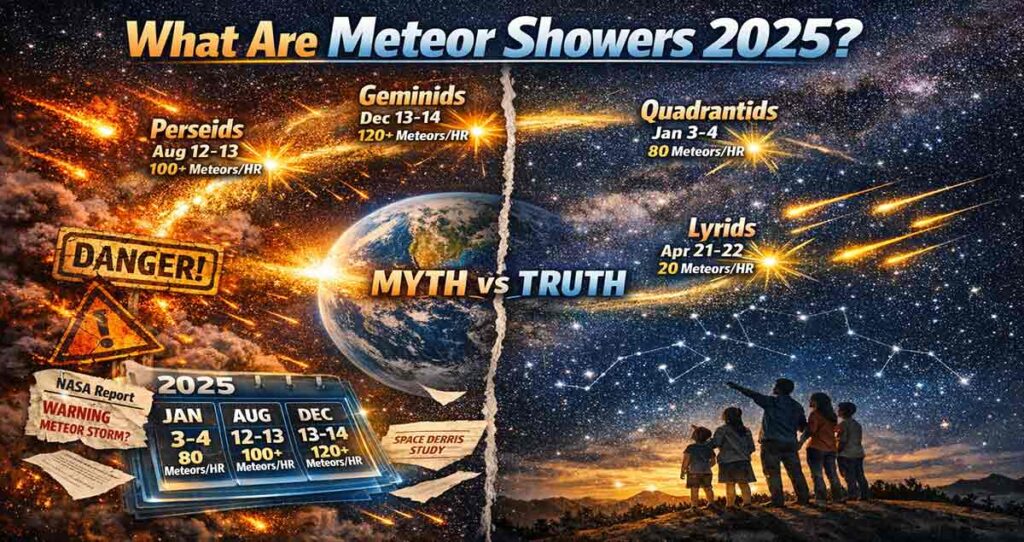
Catch some of the most popular sky shows of the year. 2025 will have the usual suspects insofar as mountain heights that glow in the dark. All of them have their streaks and fireballs that are worth going to bed.
- Quadrantids: Topped on January 3-4. Apple-shaped meteors may drop at the rate of up to 120 per hour around the Bootes group of stars. It is known to have bright fireballs that leave a trail. Better after midnight; dress up against the cold in the winter.
- Perseids: The brightest Eminent 12-13. Approximately half an hour, Perseus meteor. Well known for its dazzling bursts of Comet Swift-Tuttle tidy. This has gotten to be well-known among swarms due to hot summer evenings.
- Geminids: December 13-14 gives the best 120+ meteors per hour of Geminids. Tuned in through space rock Phaethon, they travel at a moderate speed to encourage perception. Reliable even under some moonlight.
- Others to watch:
- Lyrids in April, 20 meteors per hour, incidental shining bones
- Orionids in October 20- 25 from Halley’s Comet, presto and glowing.
- Draconids in October are generally quiet, but rare outbursts can surprise with dozens.
Meteor Science for Beginners
- Understanding meteors starts with simple definitions. There is no necessity to use long words or huge books. Have these essentials in your hands, and you will look at shooting stars in a different light.
What is a meteor?
A meteor is the flash of light that you would observe as a space rock burning in the atmosphere of the Earth. Imagine it as a flint of a celestial fire. It glimpses a second or two, and then nevermore.
- Happens exceptionally tall, at levels of almost 50 miles.
- Travels at a speed of 25,000 miles/hour or higher.
- Leaves a burning path of super-hot gases.
What is a meteoroid?
This is a little shake or a clean molecule drifting in space. Some time recently, it hit the discussion. Sizes extend from sand grains to stones. Most drift harmlessly until Earth sweeps them up.
- Comes from broken comets or asteroid bumps.
- Weighs less than a paperclip.
- Billions float out there, but few bother us.
What is a meteorite?
As it were, if a piece survives the searing dive and lands on soil, has it ended up a shooting star? These are uncommon collectibles. Museums display the big ones; small bits hide in fields.
- Needs to be fist-sized or larger to reach the ground.
- Lands quiet, no big boom from showers.
- Famous finds include Arizona crater rock.
Why do meteors light up?
Grinding from the discussion warms them to thousands of degrees. They gleam and vaporize 50 to 100 miles up, never coming to the ground. Like a coordinate struck in the wind, it flares at that point and fades.
- Speed causes the discussion to be crushed and a warm spike.
- Turns rock to vapor in seconds.
- Safe distance keeps us cozy below.
| Term | Stage | Size Example | Key Fact |
| Meteoroid | In space | Sand grain | Quiet drifter |
| Meteor | In atmosphere | Flash only | Burns bright and quick |
| Meteorite | On Earth | Pea to boulder | Rare survivor lands |
How Meteor Showers Form in 2025
Soil circles the Sun and crosses comet flotsam and jetsam ways annually. No shocks in 2025; these appear to follow the same solid cadence as always. Think of our planet slicing through invisible dust lines, sparking sky magic on schedule.
Where do meteor showers come from?
They follow back to particular focuses in the sky, named after star groupings like the Perseids from Perseus. That spot, called the brilliant, looks like the heart of the activity. Rays seem to spread from there due to our view from Earth.
- Radiant shifts as night falls, following stars.
- Perseids glow near Perseus’ handle in summer.
- Geminids burst from the Gemini twins in winter.
Comets and asteroids as parents
Comets shed dust as they warm near the Sun. Asteroids chip off bits in collisions. Both leave trails we plow into, year after year.
- Comets like Swift-Tuttle birth Perseids with icy vapor.
- Phaethon, an asteroid, feeds tough Geminid particles.
- Collisions scatter extra dust for surprise bursts.
How the dust trail works
Soil passes through these dusty trails, like driving through a rocky street on a thruway. Particles hit the disc at infinite speeds, lighting up one after another.
- Trails stretch millions of miles from comet loops.
- Fresh dust packs tightly for bright peaks.
- Earth’s gravity pulls bits into denser clumps sometimes.
Why does Earth see showers every year?
Our orbit aligns with the same trails at the same time annually, making 2025 no exception. Solar system paths stay steady, locking in the calendar.
- January hits the Quadrantid trail first.
- August grabs Perseid leftovers reliably.
- Timing drifts slowly over decades, not years.
| Shower Source | Parent Body | Peak Month | Dust Trait |
| Perseids | Comet Swift-Tuttle | August | Colorful, fast |
| Geminids | Asteroid Phaethon | December | Slow, bright |
| Quadrantids | Comet 2003 EH1 | January | Short, fireball-heavy |
Top Meteor Showers Expected in 2025
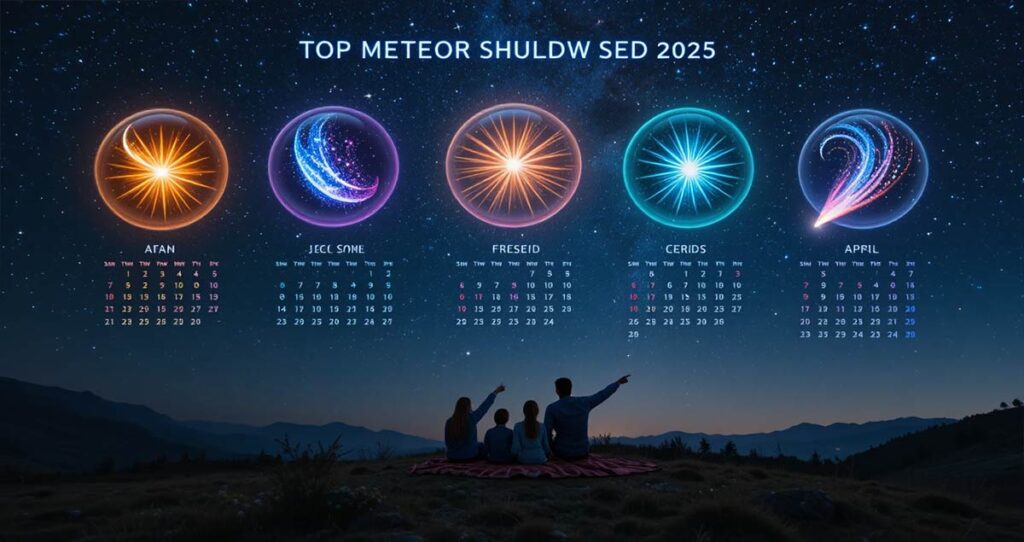
Skywatchers, check your calendars for these standout events. 2025 conveys classic meteor showers with solid crests and paramount fireballs. Each one turns clear nights into personal sky concerts, no telescope needed.
Quadrantids
Kicks off the year with a blast around January 3-4.
- Short peak lasts just hours, so time it right.
- Bright fireballs leave glowing trails.
- Best after midnight in dark spots.
- Winter chill calls for warm layers.
Perseids
August favorite peaks August 12-13. Anticipate 60 to 100 quick streaks hourly from Perseus. Warm evenings draw swarms around the world.
- Colorful flashes from Comet Swift-Tuttle dust.
- Moon phase may dim some views.
- Kids love the summer magic.
Geminids
December powerhouse on December 13-14. Over 120 meteors per hour from Gemini. Moderate movers make spotting simple.
- Sourced by asteroid Phaethon.
- Bright even in the near moonlight.
- Cold but worth the wait.
Others to Watch
Do not miss these solid backups.
- Lyrids: April 21-22, 20 per hour. Unprecedented sparkling ones surprise.
- Orionids: Halley’s Comet, October 21-23, 20-25. Speedy and ruddy hot.
- Draconids: October 8, usually calm. Outbursts can flood the sky with dozens.
| Shower | Peak Dates | Meteors/Hour | Best Feature |
| Quadrantids | Jan 3-4 | 120 | Fireballs |
| Perseids | Aug 12-13 | 100 | Colors |
| Geminids | Dec 13-14 | 120 | Reliable |
| Lyrids | Apr 21-22 | 20 | Surprises |
Is 2025 an Unprecedented Year for Meteor Showers?
No blockbuster event is standing by in 2025. These sky shows follow their usual beat, with no wild surprises on deck. Fans get the same trusted lineup that draws eyes every year.
Are meteor showers rare?
Over 100 occur yearly, but only a dozen shine brightly. Most flicker faint for pros with gear. Casual viewers chase the big names that pack a punch.
- Minor showers slip under 10 meteors per hour.
- Major ones grab headlines with 50-plus bursts.
- Global spots tweak visibility by season and sky.
Why is 2025 not record-breaking?
Orbits stay steady; no new comet fragments boost activity. Paths carved over eons hold firm. Experts spot no shifts to amp up the action.
- Comet trails age slowly, no fresh dumps.
- Gravity nudges take centuries to matter.
- Calendars match past years spot on.
Why do some nights look better?
Dark skies, no Moon, and clear weather matter most. Bad luck dims even top peaks. Plan smart to max the sparkle.
- New Moon nights steal the show.
- City lights wash out faint streaks.
- Dry air sharpens trails crisp.
Normal vs. storm-level activity
Sometimes, storms hit more than 1,000 meteors per hour, like the Perseids in 1993. 2025 stays standard. Expect solid rates, not floods.
- Normal means 20-120 dots hourly.
- Storms overwhelm eyes in minutes.
- Odds stay slim for chaos.
| Shower | Normal Peak (meteors/hour) | Storm Potential |
| Quadrantids | 120 | Low |
| Perseids | 100 | Medium |
| Geminids | 120 | Low |
Are Meteor Showers Dangerous to Technology?
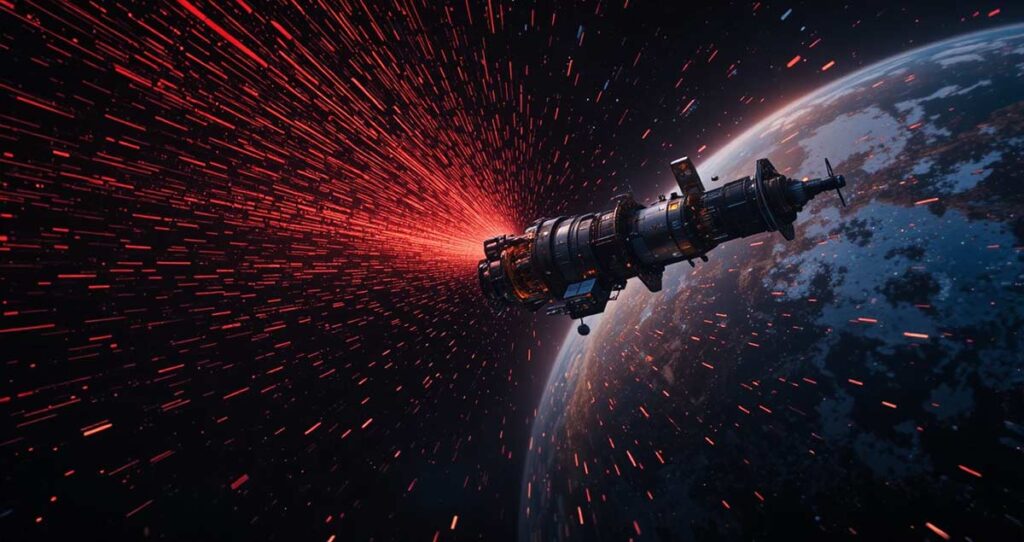
Space tech faces the real, but small, question: Can meteor showers damage satellites? Ground folks rest easy, but orbits tell a different story. Tiny bits pack a punch at cosmic speeds, yet smart designs keep most craft humming.
Can Meteors Hit Satellites?
Yes, small particles zip at 25,000-70,000 mph. Perseids and Geminids are the best dangers due to speed and numbers. Rare punctures happened, like the 1993 Olympus-1 damage. Learn more about meteor shower satellite threats.
- Particles smaller than sand grains act like bullets.
- Perseids hit fast from one direction.
- Geminids spray wide like shotgun pellets.
- Olympus lost power after a solar panel hit.
How Big Is the Real Risk?
Models show threats when particle flux rises 5% above background. Geminids act like shotgun blasts of small bits. Still, hits are rare; thousands circle securely and annually. See spacecraft risk details.
- Odds stay low for any one satellite.
- Background dust causes 90% of dings.
- SpaceX and others report few losses.
- Teams watch peaks but sleep fine.
How Satellites Are Protected
Engineers shield with Whipple shields: thin layers vaporize particles. Operators park satellites in safe orbits during peaks. NASA tracks forecasts closely. Read protection strategies.
- Whipple design spreads impact energy.
- Solar panels turn edge-on to streams.
- Software dodges high-risk zones.
- Military craft adds extra armor layers.
| Risk Factor | Level | Protection Method |
| Particle Speed | High (70k mph) | Whipple shields |
| Peak Frequency | Perseids/Geminids | Orbit maneuvers |
| Annual Hits | Rare | Forecasts from NASA |
Are Meteor Showers Dangerous to People on Earth?
Ground dwellers stay safe; the atmosphere acts as a shield. Showers send dust specks that fizzle out high above us. No one has ever gotten hurt from watching one.
What actually reaches the ground?
Almost nothing from showers. Particles weigh milligrams. Sky dust turns to ash before it drops low.
- Bits smaller than salt grains vaporize first.
- Air friction shreds them into smoke.
- Rare finds trace to lone rocks, not streams.
When can something hit Earth?
Rare large meteoroids, unrelated to showers. Big space rocks wander solo, not in comet trails. Agencies spot them early.
- Needs a grapefruit-sized entry to survive.
- Showers carry sand, not stones.
- Fireballs sometimes drop peas, no more.
How often does a meteorite hit a person?
Never fatally recorded. Odds: 1 in 1.6 million yearly. You face bigger chances of falling coconuts.
- Zero deaths in history books.
- Golfers snag space souvenirs now and then.
- Cars take more hits than folks do.
Are you safe watching from home?
Yes. Like lightning, stay indoors during storms, but showers harm zero. Compared to weather risk, both spark fear, but data calms nerves (see our weather risk guide).
- Blanket on grass beats any worry.
- Eyes safe from distant flashes.
- Kids wave at stars with zero fuss.
| Risk Type | Chance per Year | Real Worry? |
| Meteorite hit | 1 in 1.6M | No |
| Shower danger | Zero | Laughable |
| Lightning strike | 1 in 500K | Yes, take cover |
Myth 1: Meteors Can Hit Soil and Cause Destruction
Hollywood cherishes dinosaur-killers, but showers meteors? No way. They disintegrate like popcorn in hot air. The largest bits make golf-ball craters at worst. No extinction events from annual showers. Experts laugh at doomsday claims. Real asteroids get watched by NASA, not dust trails. Sleep easy.
Myth 2: 2025 Showers Will Be the Most Perilous Ever
Clickbait shouts end of the world skies! Yet 2025 mirrors every year. No rogue comets or alignments boost threats. Peak rates match history: 100-120/hour max. Satellite teams prep routinely. Myths flourish on this time’s distinctive buildup. Check calendars; enjoy normally.
Myth 3: Meteor Showers Predict Earthquakes or Disasters
Ancient tales link stars to quakes. Science says nope. Gravity from dust equals a truck’s pull–tiny. No tidal triggers. Plates shifting underground are the cause of earthquakes. Correlation? Coincidence. Focus on real alerts from USGS.
Myth 4: They Spread Harmful Radiation or Diseases
Space is the germ of sci-fi plots. Reality: vacuum sterilizes particles. Burn-up adds no radiation beyond cosmic norms. The atmosphere blocks most rays. Flights see more exposure. Pure fiction.
Myth 5: Bright Meteors Mean a Catastrophic Impact
Fireballs astonish, starting to freeze. Brightness appears as speed or estimate, not fate. Most fail out. Chelyabinsk 2013 was a maverick space rock, not shower-related. Shining breaks even with wonderful.
Myth 6: Government Hides Real Dangers from Showers
Conspiracy corners claim cover-ups. NASA broadcasts forecasts openly. Data from radars and cameras proves safety. Transparency rules space agencies. No secrets needed.
Myth 7: Showers Disrupt Electronics and Power Grids
EMPs from movies? Dust sparks no pulses. Plasma trails fade fast. Grids face solar flares, not meteors. EMP myths mix with real geomagnetic storms.
7 Scientific Truths About Meteor Showers
Science clears up the hype around meteor showers. These truths prove they bring wonder, not worry. Specialists back each point with difficult information and a long time of sky watching.
Meteors burn up innocuously in the air
Dust bits hit the air at wild speeds and melt away. Nothing big enough reaches us. All action stays miles overhead.
- Heat turns rock to vapor fast.
- Trails fade in seconds.
- Atmosphere shields like a giant net.
No evidence links them to earthly disasters
Zero proof ties showers to quakes, storms, or bad luck. Old tales do not hold up. Real causes hide deep in Earth’s plates.
- Gravity pull too weak to shake the ground.
- Weather runs on the sun and the seas.
- Studies check history, find no match.
Peak rates are safe and predictable.
Calendars nail the timing every year. Counts top at 120 per hour, no flood. Plan with confidence.
- Radar tracks dust clouds ahead.
- Apps predict the best night spot on.
- No sudden spikes blindside us.
Sizes make impacts extremely rare.e
Shower particles mimic sand specks. Big rocks roam alone, not in packs. Odds stay tiny for ground strikes.
- Most weigh under a gram.
- Air blasts shred the rest.
- Museums hold all known facts.
Historical data debunks danger claims.
Centuries of records show safe nights. 1833 Leonids wowed crowds, scared some. All ended quietly.
- Newspapers hyped the end of the world.
- Folks watched again next year.
- Patterns prove calm repeats.
NASA and experts confirm safety
Space agencies share open forecasts. Pros laugh at panic posts. Data drives their word.
- Cameras count rates live.
- Models spot real threats early.
- Public guides stress fun.
Satisfaction exceeds any negligible risks
Grab a chair and look up. Kids build memories; adults unwind. Sky gifts beat tiny what-ifs.
- Free show beats any ticket.
- Families bond under stars.
- Share photos, spread joy.
| Truth | Key Proof | Why It Matters |
| Harmless burn-up | Altitude 50+ miles | No ground reach |
| No disaster link | Zero quake data | Myths stay myths |
| Predictable peaks | Annual orbits | Plan worry-free |
| Tiny sizes | Milligram weights | Impacts near zero |
| History safe | 200+ years of records | Past calms present |
| Expert okay | NASA radar | Trust the pros |
| Fun first | Global views yearly | Joy rules the night |
Past Meteor-Shower Fears That Were Wrong
People long ago panicked over bright skies, just like some do today. History shows these scares always faded to fun memories. Real events prove showers harm no one, time and again.
1833 Leonids
1833 Leonids terrified folks, thinking the world had ended. Papers predicted doom. Reality: harmless show. Up to 100,000 meteors per hour lit the sky from sunset till sunrise.
- Witnesses in America ran to churches at dawn.
- Poets called it stars falling to judgment.
- No damage, just awe that spread worldwide.
- The next return in 1866 brought calmer crowds.
1866 Arietids
1866 Arietids sparked comet crash fears. All fizzled. Daytime shower caught by telescopes, not eyes. Rumors flew of sky chunks heading down.
- London papers warned of collision panic.
- Experts calmed nerves with orbit math.
- Zero impacts, pure daylight dazzle.
- Proved eyes miss some of the best shows.
Lessons from History
History repeats safe patterns. Fears grab headlines, facts bring peace.
| Event | Year | Meteors per Hour | Public Reaction | Outcome |
| Leonids | 1833 | 100,000+ | End times terror | Safe wonder |
| Arietids | 1866 | Thousands (day) | Crash predictions | Nothing fell |
| Perseids | 1993 | 200+ | Storm excitement | Harmless peak |
Safe Ways to Watch 2025 Meteor Showers
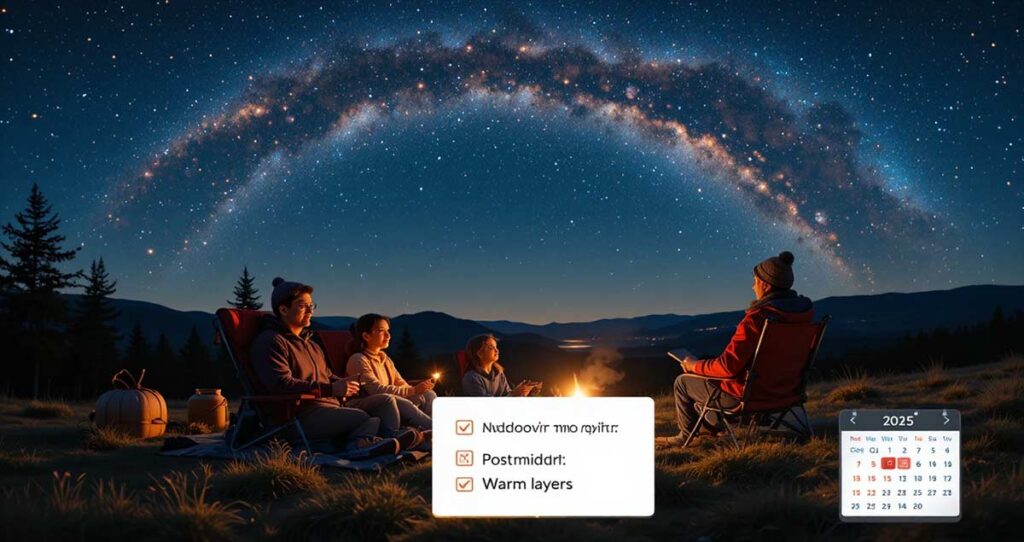
Turn worry into wonder with these easy steps. Grab family or friends, head out, and catch the show safely. No gear beats clear eyes and patience.
Find dark sky spots
Escape the city glow for sharp views. Drive 30 miles out to fields or hills.
- State parks beat suburbs hands down.
- Use light pollution maps online.
- Face east away from roads.
Best viewing times
Time your night right for max streaks. Peaks hit late, but magic builds slowly.
- Midnight to dawn catches most action.
- Check moon phase; new moon wins.
- Perseids gleam best around 2 a.m. neighborhood time.
Tools and apps to use
Apps guide you freely and simply. Phones light the way without spoiling the dark.
- Stellarium shows radiant points live.
- IMO Meteor Shower Calendar tracks peaks.
- SkySafari pinpoints constellations quickly.
Safety tips for eyes and comfort
Eyes adjust in 30 minutes; keep it dark. Comfort keeps you out longer.
- No phone screens or flashlights.
- Lie back on a blanket or chair.
- Layer clothes, bring hot drinks, bug spray.
| Tip Category | Do This | Avoid This |
| Location | Dark rural spots | City lights |
| Timing | Post-midnight hours | Bright moon nights |
| Eyes | 30-min dark adapt | Phone glow |
| Comfort | Warm layers, recliner | Thin clothes |
Why Myths About Meteor Showers Spread
Fear sells. Social media amplifies “what if” posts. Movies like Armageddon fuel it. Confirmation bias grabs scary tales. Facts bore; drama clicks.
Fear Sells
Scary stories grab eyes fast. News sites push “doom skies” for shares. Calm truth loses the race.
- Clickbait titles hook scrollers.
- Panic spreads quicker than joy.
- History shows fear wins wallets.
Social Media Amplifies “What If” Posts
TikTok and X light up with wild claims. One viral video snowballs doubts. Shares bury real info.
- Short clips skip science steps.
- Echo chambers boost bad takes.
- Likes reward hype over homework.
Movies Like Armageddon Fuel It
Hollywood paints space rocks as killers. Big screens stick in minds. Real dust feels dull next to that.
- Asteroid flicks mix fact with fiction.
- Trailers tease end times yearly.
- Viewers blur movie with meteors.
Confirmation Bias Grabs Scary Tales
We spot what fits our worries. Safe reports get skipped. Brains chase the thrill.
- Bad news feels true first.
- Friends share freaky finds.
- Doubt clings; data takes work.
| Myth Driver | How It Works | Real Fix |
| Fear Sells | Grabs quick attention | Check trusted sources |
| Social Media | Viral what-ifs spread | Pause before share |
| Movies | Dramatizes tiny risks | Learn science basics |
| Bias | Picks scary stories | Seek all sides |
How to Spot Meteor-Shower Misinformation Online
Spot fake Sky News before it fools you. Bad info spreads fast, but simple checks keep you sharp. Trust facts over flash.
Check Sources: NASA, IMO over TikTok
Pick pros like NASA or the International Meteor Organization first. Skip short videos from randos. Real experts share data, not drama.
- NASA posts free calendars with radar-proof.
- IMO tracks live counts worldwide.
- TikTok loves hype; science sites stick to math.
Verify Claims with Data
Match posts to numbers. “500 meteors guaranteed?” Dig for past peaks. Real forecasts use orbits, not guesses.
- Cross-check with multiple sites.
- Look for dates and rates cited.
- Ignore vague “epic storm” talk.
Guaranteed Storm? Stay Skeptical
Changes happen once a decade, not yearly. Words like once-in-a-lifetime yell clickbait. History shows most peaks stay tame.
- Storms need fresh comet dust, rare.
- Pros predict odds, not promises.
- Hype skips the fine print.
Peer-Reviewed Beats Rumors
Journals and studies trump tweets. Universities back real work with tests. Blogs guess; papers prove.
- Google Scholar finds solid reads.
- Rumors lack sources or dates.
- Experts cite each other correctly.
| Red Flag | Smart Check | Trust This Instead |
| No source linked | Ask for proof | NASA/IMO pages |
| All caps hype | Hunt real peak data | Radar count logs |
| “Secret danger” | Seek peer studies | Science journal PDFs |
How to Watch Meteor Showers Safely in 2025
Lie back, relax. Avoid lights. Hydrate. Pets join fine. No eye strain from flashes. These steps turn any night into easy sky fun for all ages.
Lie Back, Relax
Stretch out on grass or a lounge chair. Neck up, eyes wide to the whole sky. Tension blocks the view.
- Pick flat spots free of roots.
- Blanket cushions the cold ground.
- Breathe deep, let wonders unfold.
Avoid Lights
Darkness sharpens your sight. City glow kills faint streaks. Allow your eyes to adjust for 20 minutes.
- Turn off porch bulbs early.
- Cover phone screens completely.
- Red flashlights preserve night vision.
Hydrate
Sips of water beat dehydration on long watches. Late nights sneak up dry.
- Bring a thermos of a cool drink.
- Skip soda; it fills you fast.
- Kids need small cups handy.
Pets Join Fine
Dogs and cats love the calm. They spot meteors too sometimes. Keep leashes loose in wild spots.
- Familiar yard works best first.
- Watch for skittish reactions.
- Stars calm anxious pups quickly.
No Eye Strain from Flashes
Meteors stay high and dim. Brief glows harm nothing. Blink normally, no squint needed.
- Distance keeps the light soft.
- No binoculars; naked eyes rule.
- Rest if tired, try again soon.
| Safety Step | Why It Helps | Quick Tip |
| Lie Back | Full sky view | Use a pillow for the neck |
| Avoid Lights | Sharpens faint meteors | Red light only |
| Hydrate | Staves off late fatigue | Water over snacks |
| Pets Join | Family fun | Leash in new areas |
When to Worry (and When Not) About Falling Objects
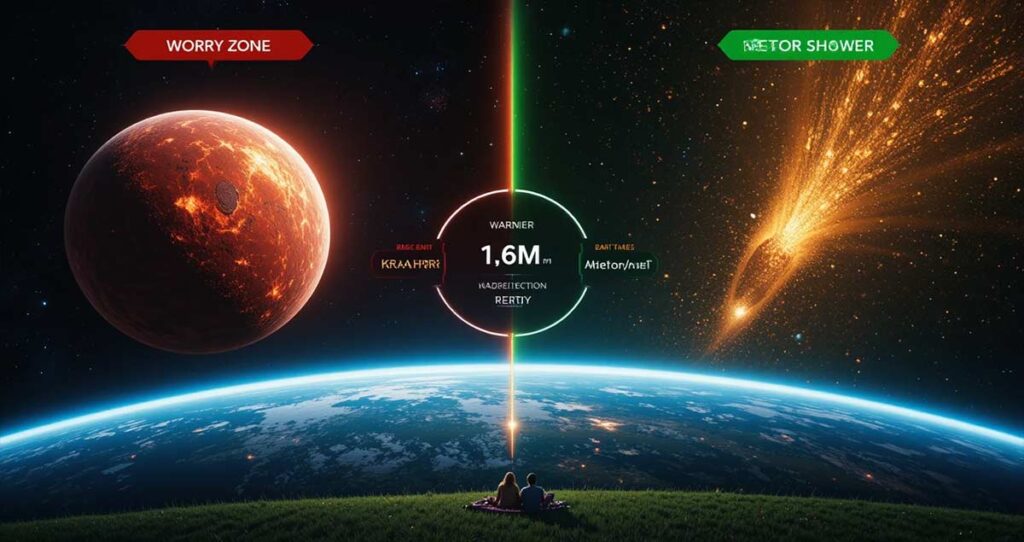
Worry about real threats, skip shower panic. Smart steps separate hype from alerts. Stay calm, eyes open.
Worry: Large Asteroid Alerts (NASA Tracks)
NASA spots city-killers early with telescopes. Systems like ATLAS scan the skies nightly. Alerts give days or weeks’ notice.
- Check NASA’s Sentry list for risks.
- Threats over 140 meters trigger plans.
- DART tech has already tested deflections.
- Apps push warnings if odds rise.
Not: Showers
Meteor showers drop harmless dust. No big rocks join the stream. Billions watch yearly with zero hits.
- Particles burn up 50 miles high.
- Sand grains, not boulders.
- History logs no ground harm.
- Safe as summer fireflies.
Fireballs? Report to Apps, Enjoy
Bright streaks thrill, not threaten. Snap details, share with pros. Most fizzle safe.
- Use the American Meteor Society app.
- Note time, direction, and color.
- Helps map real paths.
- Turns spotting into citizen science.
| Scenario | Worry Level | Action |
| NASA asteroid alert | High | Follow official updates |
| Meteor shower | None | Grab a blanket, watch |
| Single fireball | Low | Report, snap a photo |
How to Capture and Share the 2025 Meteor Showers
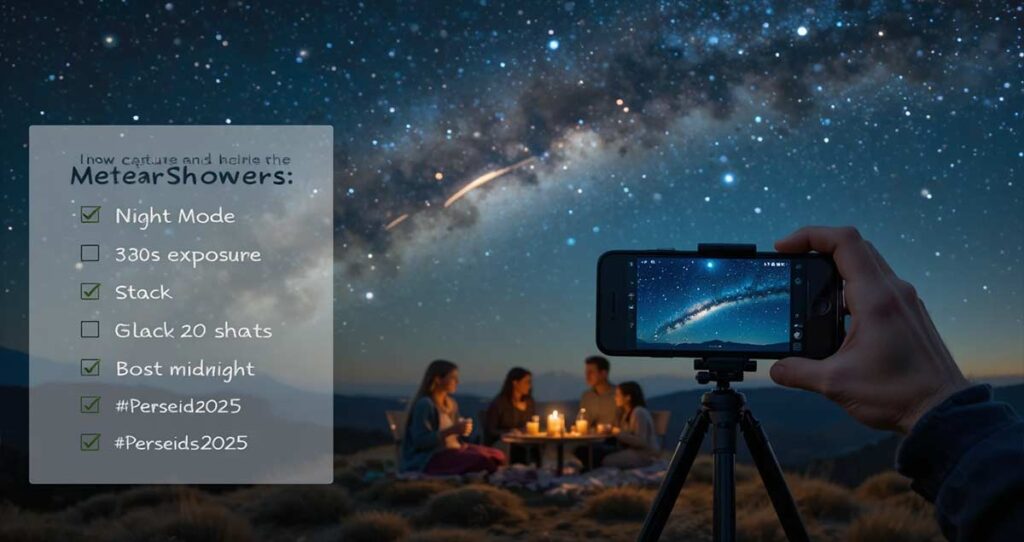
Phone cameras catch streaks in night mode. Tripods help. Share tips build skills like future-proof jobs in content creation. Edit simply, post with #Perseids2025.
Phone Cameras Catch Streaks in Night Mode
Most phones grab quick shots without fuss. Switch to night or astro mode for low-light magic. Hold steady for sharp trails.
- Open the camera app, pick the night setting.
- Point wide at the radiant area.
- Tap shutter, wait 10-30 seconds per shot.
- Stack 20 images later for brighter streaks.
Tripods Help
Steady base beats shaky hands. Cheap ones work fine on grass or tables.
- Extend legs low to hug the ground.
- Weigh down with rocks or a bag.
- Remote shutter apps avoid wiggles.
- Level bubble keeps horizons straight.
Share Tips Build Skills Like Future-Proof Jobs
Turn snaps into stories. Post practice honed timeless talents like photo edits and captions. Creators thrive on sky content.
- Crop tight on best streaks.
- Boost contrast light in free apps.
- Add time and location captions.
- Hashtags like #Geminids2025 pull views.
Edit Simply, Post with #Perseids2025
Quick tweaks make good better. Share right away to spark chats.
- Upping shadows reveals faint meteors.
- No filters; keep colors true.
- Instagram Reels loop shots are smooth.
- Tag friends for group hunts.
| Gear Need | Budget Pick | Pro Tip |
| Phone | Any recent model | Night mode on |
| Tripod | $20 Amazon mini | Remote trigger app |
| Edit App | Snapseed free | Stack for faint trails |
Conclusion
2025 meteor showers bring pure sky magic, no danger in sight. Facts crush old myths flat. Snatch a cover, step exterior, see up, and splash in the meteor shower security 2025. Share genuine stories with companions. Make memories under safe, sparkling skies that unite us all.
FAQs
Are the 2025 meteor showers really dangerous?
No, they pose zero threat to anyone on the ground. Tiny dust bits burn up high in the sky, far from harm. Billions enjoy them yearly without a scratch.
How often do meteor showers happen?
Over 100 zip by each year around the globe. About a dozen major ones grab the spotlight with bright displays that everyone can spot easily.
Can a meteor ever hit my house?
Shower pieces never make it down; they vaporize first. Solitary shooting stars seldom strike homes, with chances slimmer than a lightning jolt.
Why do some showers produce more meteors?
Denser dust trails from fresh comet bits pack tighter swarms. Geminids shine steadily thanks to the asteroid parent dropping steady crumbs.
Do meteor showers affect satellites?
Minor risk exists; Can meteor showers damage satellites? Yes, but tiny hits stay rare. Shields and orbit shifts keep most safe.
How can I predict the best viewing nights?
Check IMO calendars for peaks and moon phases. Apps like Stellarium flag dark skies perfect for max streaks every time.
