Ever pondered why octopuses pump blue blood with three hearts? In 2026, researchers uncovered these strange sea creature truths: two hearts thrust blue blood to gills for oxygen, whereas a huge central heart sends it body-wide. This setup thrives in cold, deep seas, powering escapes and hunts. Science truths around octopuses uncover nature’s wild building, no ruddy blood here, fair copper-fueled blue!
Introduction
A slippery ocean animal with three hearts beating blue blood through its veins. Octopuses aren’t your normal angle; they’re sea oddballs. Their triple-heart framework and sky-blue blood make them stars of science realities, approximately octopuses. In 2026, new investigations reveal indeed more. Adhere around as we jump into these odd sea creature realities and why they matter.
What Is an Octopus?
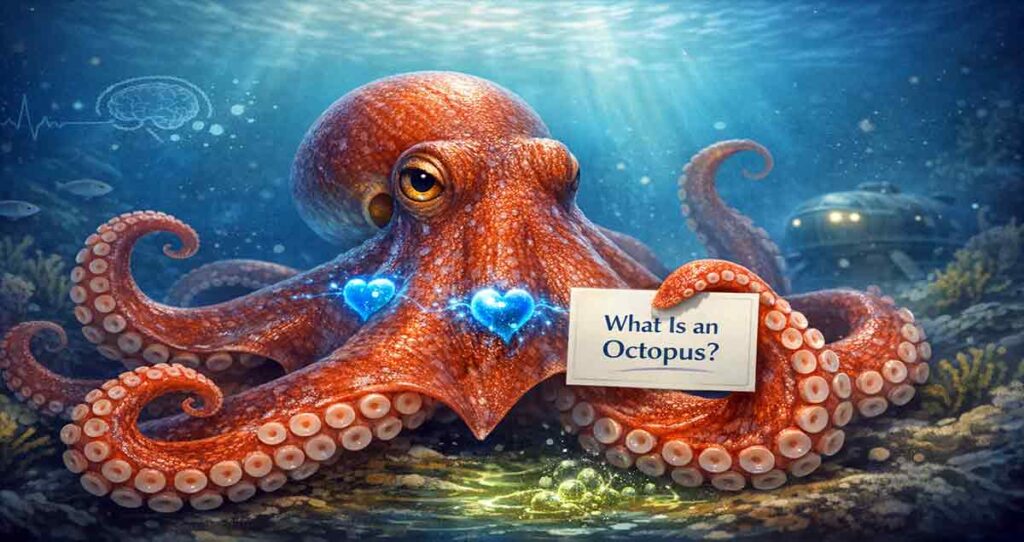
Octopuses get your attention right away. These soft-bodied animals belong to the cephalopod family, cousins to squid and cuttlefish. They live in seas around the world, from shallow reefs to pulverizing deep-sea trenches. Most make arms longer than your leg, but a few scaled-down ones fit in your palm.
What sets them apart? No bones, fair squishy muscle, and smarts. They fly through water utilizing a siphon as a built-in water weapon. Camouflage rulers, they alter color and surface in seconds to disappear. Science realities approximately octopuses appear they’re eluding specialists, pressing through modest holes.
Imagine climbing through deep-sea mysteries, where octopuses run the show in that shadowy world. Over 300 species exist, each adjusted to its spot. The monster Pacific octopus ranges 30 feet; the short-arm species hides in coral breaks. They chase crabs at night, utilizing eight arms like agile fingers.
These folks advanced 300 million a long time back, outlasting dinosaurs. Bizarre ocean animal facts? They taste with their arms and see through skin. No wonder divers call them aliens. Another, let’s break open their heart-pumping riddle.
What is the actual number of hearts an octopus has?
Yes, octopuses have three hearts packed into one body! Two littler branchial hearts sit close to the gills. They pump blood over gill fibers, getting oxygen like modest howls fanning a fire. The third, an enormous systemic heart, acts as the boss. It pushes oxygen-rich blood to the body, brain, and arms.
When the octopus swims, the systemic heart takes a break. Those gill hearts keep oxygen flowing solo, smart design for bursts of speed. Resting? All three team up for a steady flow. This setup beats a single heart hands-down in low-oxygen, profound water.
Think of it like a car motor: two pumps fuel the radiator (gills), and the primary one revs the entire ride. Science actualities almost octopuses demonstrate this triple danger, letting them flourish where angles tumble. No wonder they’re survival champs.
Why Is Octopus Blood Blue?
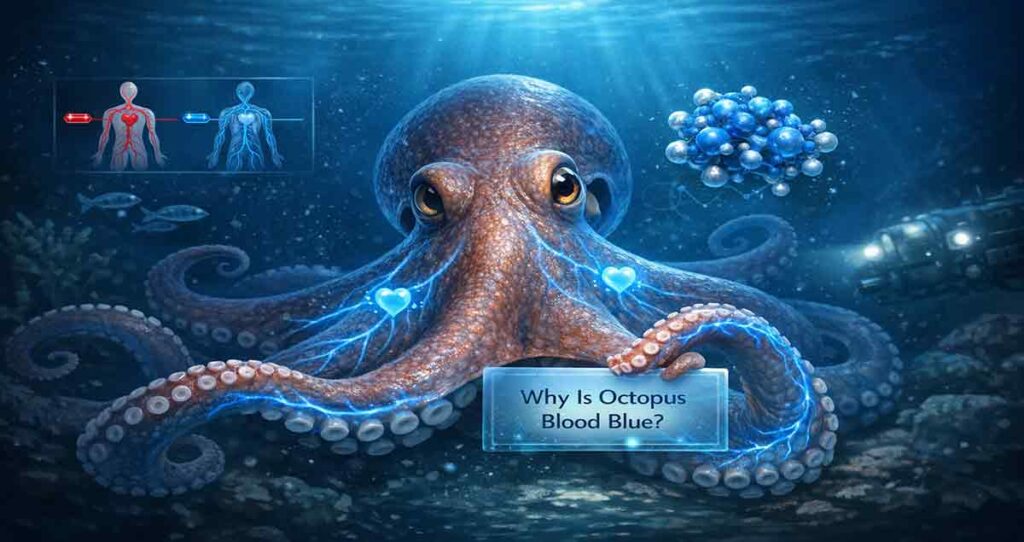
Why is octopus blood blue? You inquire a beat address among unusual sea creature actualities. Human blood gleams ruddy, much obliged to hemoglobin, an iron-rich protein snatching oxygen. Octopuses utilize hemocyanin, pressed with copper. Oxygen ties to it, turning blood shining blue, like radiator fluid in your car radiator.
Copper sparkles blue when stacked with oxygen; it dulls clear without. This suits cold, oxygen-poor profundities. Hemoglobin clumps in chill; hemocyanin streams free, carrying more oxygen per drop. Perfect for jetting from sharks.
In warm shallows, blue blood still works but shines less. Science realities approximately octopuses highlight evolution’s change: copper beats press down profoundly. Touch it, and it feels cold, dangerous, safe. Blue blood powers their endless energy.
How the Three-Heart System Works Underwater
Swim with an octopus, and watch the hearts hustle. Step one: it rests on the seafloor. Gill hearts pump water over gills, loading blue blood with oxygen. The systemic heart circulates it to the arms and brain, like a steady river feeding a garden.
- Hunting time? It spots a crab. Gill hearts ramp up, oxygenating blood fast. The octopus jets forward; the systemic heart pauses to save energy. Gill’s heart pushes blood to the muscles, fueling the sprint. Arms snatch prey, bam!
- Post-hunt rest: all hearts sync. Blue blood delivers nutrients and clears waste. In deep water, low oxygen stresses single hearts. Octopus trio adapts: branchial hearts recycle water efficiently.
- Metaphor? Like a relay race, two pass the oxygen baton, and the main runner finishes strong. Bizarre ocean animal facts show this power’s three-color changes and brainy escapes in seconds. Underwater, three beats one.
Health Benefits of Studying Octopus Hearts and Blood
Octopus biology sparks medical breakthroughs. Three-heart efficiency inspires artificial hearts for humans, pumps that multitask without fatigue. Blue blood’s hemocyanin battles clots superior in cold; analysts change it for blood transfusions in surgeries.
Robotics borrows as well: delicate, heart-like pumps construct adaptable submerged bots for sea cleanup. In 2026, trials test octopus-inspired valves for heart illness patients, with fewer dismissals and more streamlined procedures.
Cancer research eyes regeneration: octopus arms regrow with blood boosts. Tips? Eat octopus for omega-3s, mimicking hemocyanin perks, supports heart health. Science facts about octopuses fuel tomorrow’s meds.
Fascinating Octopus Facts That Make Them ‘Aliens of the Sea’
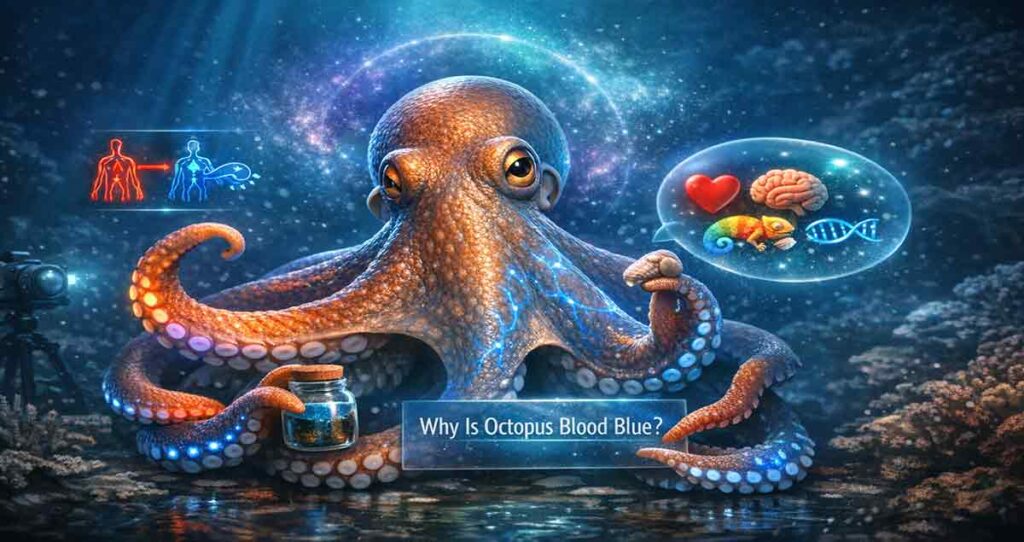
Octopuses scream aliens of the sea with these bizarre ocean animal facts:
- Camouflage wizards: They streak 75 skin colors in a pulse, mirroring rocks or angles. Skin cells grow like little inflatables.
- Brainiac: Three-fifths of neurons in arms, each arm thinks solo, unscrewing jars without brain orders.
- Ink escape: Blasts a smoke cloud plus a taste-faking chemical, confusing predators.
- Regrow masters: Lose an arm? Grows back in weeks, heart system rushing blue blood to heal.
- Tool users: Some carry coconut shells as armor or sort shells by color, smarter than dogs.
- Short lives, big lives: Moms guard eggs without eating, dying post-hatch; dads wander off early.
- Problem-solvers: Labs show they learn mazes faster than lab rats.
These science facts about octopuses prove evolution’s wild side. They’re Earth’s smartest invertebrates.
How Scientists Study Octopus Hearts and Blood in 2026
In 2026, tech unmasks octopus secrets without harm. High-res cameras film hearts beating in tanks, see gill pumps flex live. Ultrasound waves map blood flow, no cuts needed.
- Genetics scans DNA for hemocyanin tweaks. CRISPR edits mimic blue blood in lab cells. For structure, X-ray imaging peers inside.
- Check the European Synchrotron Radiation Facility, their Blue blood: a challenge for structural biologists, which beams X-rays at hemocyanin, revealing octopus blood’s molecular twist.
- University of Liege’s Blue octopus blood traces history: how copper circulation evolved.
- Non-invasive tags track wild octopuses, heart rates spike during hunts. Apps simulate three-heart pumps for students. Bizarre ocean animal facts emerge daily, harm-free.
Why Octopus Biology Matters for the Future of Science
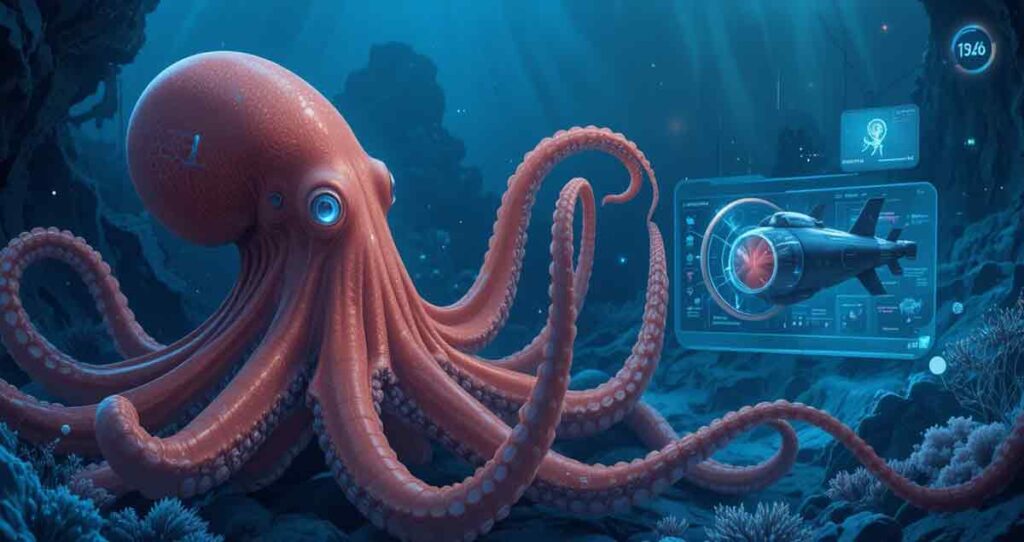
Octopus traits tackle big issues. As oceans warm, blue blood studies predict survivor species amid
ocean climate shifts. The three hearts model is an efficient tech for deep-sea mining bots.
Bio-design duplicates delicate bodies for fiasco robots to crush through rubble. Climate inquiry about joins hemocyanin to fermentation impacts; 2026 information guides security.
Ocean exploration booms: octopus smarts inspire AI subs navigating alone. Science facts about octopuses bridge nature and tech for a sustainable sea.
Fun Ways to Learn More About Octopuses
Dive deeper casually:
- Documentaries: My Octopus Educator on Netflix, a genuine bond with a wild one. Or BBC’s Octopus World for hunts.
- Aquariums: Visit the Monterey Narrows Aquarium, a mammoth Pacific aquarium. Virtual tours are far.
- Apps: OctoQuest gamifies realities; AR looks as if three hearts are beating.
- Books: Other Minds by Dwindle Godfrey-Smith, simply perused on smarts.
- YouTube: Deep Marine Scenes channels film live cams.
Hunt science facts about octopuses your way, no PhD needed.
FAQs
Why are there three hearts in octopuses?
Two gill hearts oxygenate blue blood; the main one pumps it body-wide. This powers deep-sea life where oxygen’s scarce, like backup generators for a blackout-prone house.
Is blue blood normal in animals?
Yes! Horseshoe crabs and a few creepy crawlies share hemocyanin. Why is octopus blood blue? bubbles down to copper oxygen carriers thriving in cold water, not press like our claim.
Do all octopuses have three hearts and blue blood?
Every species does; blue blood and triple hearts are cephalopod staples. Science facts about octopuses confirm uniformity across 300+ types.
How long do octopuses live?
Most 1-2 years; giants hit 5. Females die post-egg hatch, hearts worn out from guarding. Bizarre ocean animal facts!
Can octopuses really regenerate limbs?
Absolutely, arms regrow fully in 6 weeks, with blue blood rushing nutrients. Even parts of hearts heal minor damage.
Is octopus blood safe for humans to touch?
Totally harmless, no toxins. Feels cool and sticky; washes off easily. Divers handle it often.
What makes octopuses so smart?
500 million neurons (more than dogs), distributed brains in arms. Illuminate, utilize instruments, and advance for survival.
Do octopuses feel pain?
Evidence says yes, they avoid injured arms and rub them. Hearts race under stress, like us.
How do scientists collect octopus blood for study?
Ethical vein pricks in labs (like human draws), or non-harm imaging. 2026 welfare rules minimize stress.
What divulgences have almost octopuses experienced in 2026?
Synchrotron X-rays mapped hemocyanin totally; AI predicts heart responses to warming oceans.
