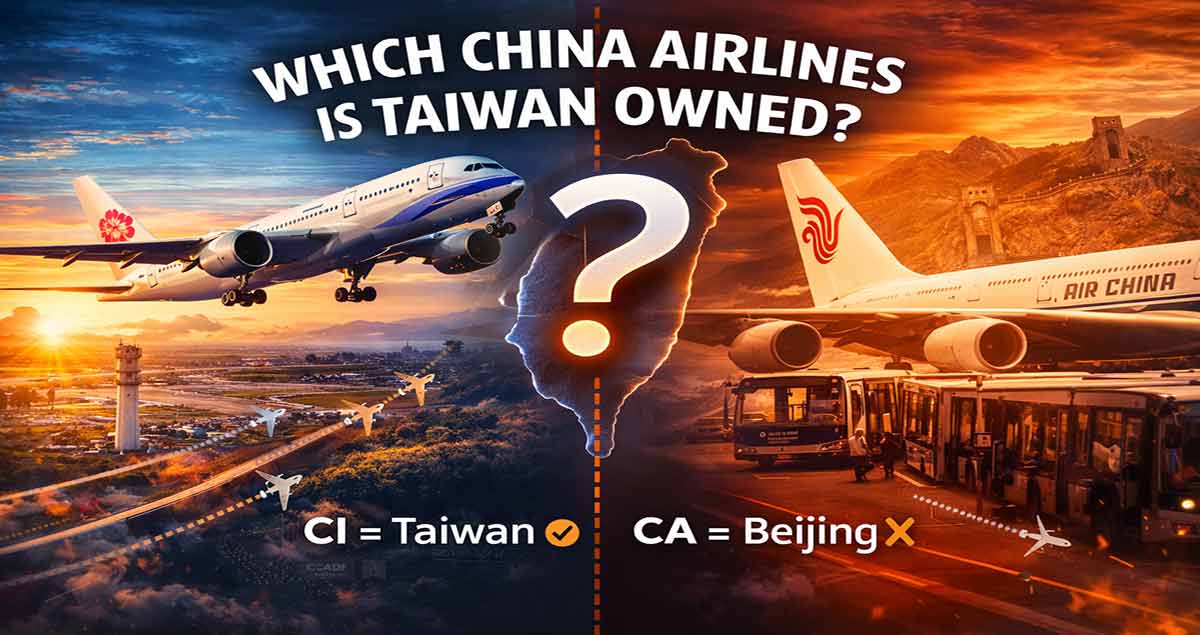
China Aircraft (the Taiwan-based one) is claimed by Taiwan through the China Flying Improvement Establishment (CADF), a government-linked group. It’s not the same as Look at China, which is China’s state-owned airship carrier. This blend- up happens due to similar names, but China Airlines flies from Taipei’s Taoyuan center and serves the world as Taiwan’s abecedarian carrier. Let’s break it down unnaturally.
Introduction
Ever looked for flights and considered, Hold up, which China Carriers is claimed by Taiwan? You’re not alone. The title traps numerous individuals. This article clears up the perplexity with basic actualities, ownership, history, and why it matters for travelers. Adhere to around, you’ll know precisely which carrier to book.
What is China Airlines?
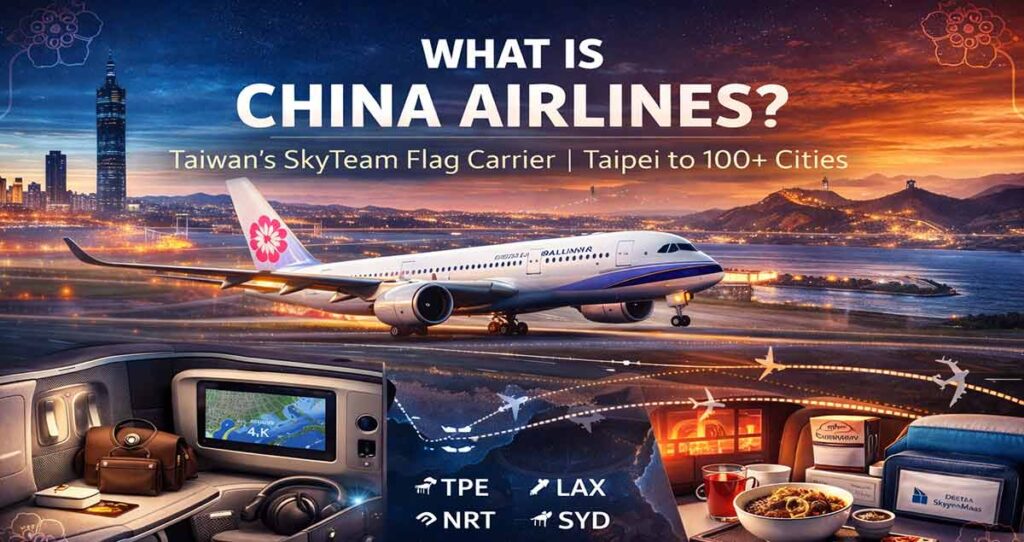
China Aircraft is Taiwan’s greatest worldwide aircraft. It flies trippers and cargo from Taipei to over 100 destinations around the world. Suppose it is Taiwan’s front hall to the world, your flight from Taoyuan Airport to Los Angeles, London, or Sydney.
Founded decades back, it begun little but developed into a major player. Nowadays, it carries millions of travelers annually. It’s a portion of the SkyTeam collusion, so your miles work with Delta or Discuss France. The aircraft centers on premium benefits, with comfy seats and delicious suppers motivated by Taiwan.
People frequently confound it with Discuss China, but they’re distinctive nations and companies. China Airlines gladly speaks to Taiwan, with its blossom symbol (the plum bloom) on each plane. If you’re arranging a trip from Asia, this is the carrier connecting Taiwan to all over. Secure, solid, and developing quickly.
China Airlines Ownership Explained
Let’s get straight to it: China Aircraft is claimed by Taiwan. But how? It’s not 100% government-owned like a few aircraft. In step, the China Flying Advancement Establishment (CADF) holds the greatest stake, around 55% of the offers. CADF is a non-profit tied to Taiwan’s government, set up to oversee key businesses like flying.
- The rest? Public shareholders and investors buy shares on Taiwan’s stock exchange (TPE:2610). This mix makes it publicly traded but Taiwan-controlled. Think of it like a family business where the family (Taiwan via CADF) owns the majority but lets others invest.
- Is China Airlines state-owned or private? It’s both. State-influenced through CADF (majority owner), but private because shares trade openly. No single politician calls shots; it’s run by pros focused on profits and passengers.
- Who runs China Airlines: CADF and shareholder structure? CADF sets a big-picture strategy. Daily ops? The CEO and board are elected by shareholders. Top holders include funds and banks, all Taiwan-based. This setup keeps it stable yet flexible. No wonder it thrives despite politics.
Is China Airlines State-Owned or Private?
Publicly listed with strong government influence, a hybrid model. Taiwan’s China Carriers has been exchanging on the Taiwan Stock Exchange (TPE:2610) since 2000. Not 100% state-owned like Discuss China, but CADF’s controlling stake obscures lines. Stable funding, independent ops. Balance keeps it nimble yet backed.
Ownership Breakdown (2025):
| Shareholder | Stake | Type |
| CADF | ~30% | Gov-linked |
| Employees | 20% | Staff union |
| Public/Institutions | 50% | Retail + funds |
Public accountability + government safety net. Best of both worlds.
Who Runs China Airlines: CADF and Shareholder Structure
CADF calls shots, China Aviation Development Foundation holds the largest single block (~30%), government-linked but operates independently. Founded in 1998, the crisis bailout stabilized the post-crash era. Employees own 20% via the union, pilots, and crew vote shares. Rest split public investors, banks, and funds. No mainland interference.
Board Power:
- CADF reps: Strategy, routes
- Employee directors: Crew welfare
- Independent directors: Global standards
Instead of bureaucrats, the CEO reports to the board. CADF ensures Taiwan’s interests first, US routes are protected, and the fleet is modernized. Public listing forces profit focus. Structure = government muscle + market discipline. Smart setup flies high.
Taiwan’s Role in China Airlines
Taiwan isn’t a fair domestic base; it’s the heart. China Aircraft employs Taiwan’s air terminals, laborers, and cash to run. The government sees it as a national champion, boosting tourism and exports.
From hiring local pilots to sourcing food, everything ties back to Taiwan. It’s like your hometown team representing you abroad. This deep link shapes decisions, from routes to branding. No surprise it’s Taiwan’s pride.
Why is China Airlines considered a Taiwan airline, not a China airline
Names fool people. China Airplane sounds like a landscape, but it’s 100% Taiwanese. Built up in Taiwan after the post-1949 withdrawal, it talks to the Republic of China (Taiwan’s official title). Its HQ? Taoyuan, Taiwan. Planes registered? Taiwan.
Mainland has Air China for that role. China Airlines flies the Taiwan flag colors. Simple test: Check the website, it’s zhonghua.com, Taiwan’s term for China. Not Beijing-based. Clear as day.
How politics affects China Airlines’ branding and partnerships
Politics is tricky. Taiwan and mainland China clash over one China. China Airlines can’t always fly direct without special deals. Branding? It avoids red flags (literally) to appeal globally.
Partnerships like SkyTeam help bypass limits. But tensions mean route changes. Still, it partners smartly, Delta for the US, KLM for Europe. Politics hurts, but savvy moves keep it flying high.
China Airlines vs. Air China
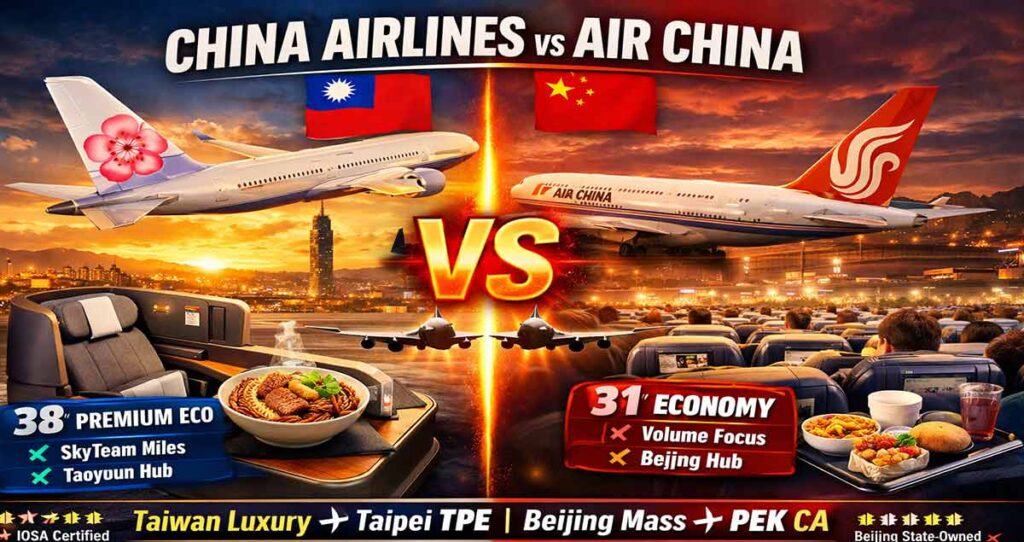
Two airlines, two Chinas. China Airlines = Taiwan. Air China = mainland China. Easy mix-up from names, but dig deeper.
China Airlines flies from the Taoyuan center, cherishes premium benefits, and joins SkyTeam. Air China? Beijing-based Star Alliance, more domestic focus. China Airlines feels boutique; Air China, massive state machine.
Ownership? Taiwan’s CADF for China Airlines. Beijing’s government for Air China. Routes overlap in Asia-US, but China Airlines shines on Taiwan stops.
Pick China Airlines for comfier long-hauls from Taipei. Air China? Cheaper mainland hops. Both are secure, but vibes vary.
China Airlines vs. Air China: Which is Owned by Taiwan?
China Airlines. Taiwan’s CADF owns a majority stake (~30% controlling interest). Air China? 100% mainland state-owned via SASAC. End of story. Two airlines, two Chinas, two identities. CI flies Taiwan’s flag with plum blossom tail; CA waves Beijing’s red phoenix.
One premium SkyTeam player, one volume Star Alliance giant. Booking confusion costs CI millions yearly, and passengers panic seeing China assume mainland. Check two-letter code: CI = Taiwan, CA = Beijing. Tail tells the truth. A simple ownership fact clears 90% mix-ups instantly.
Operational and Branding Distinctions
- Ops: China Airlines hubs Taoyuan (TPE); Air China, Beijing PEK/PKX mega-complex. CI connects Asia-US premium; CA packs domestic feeders.
- Branding: Plum blossom (Taiwan) vs. ruddy phoenix (locale). China Carriers pushes luxury, lie-flat Exchange, 38″ Premium Eco. Discuss China chases volume, 500-seat A380s, tight 31″ economy.
- Alliances: SkyTeam (CI) vs. Star Organization together (CA). Delta miles vs. United points.
Quick Comparison:
| Feature | China Airlines | Air China |
| Hub | Taoyuan (TPE) | Beijing (PEK) |
| Tail | Plum flower | Red phoenix |
| Focus | Premium routes | Domestic volume |
| Alliance | SkyTeam | Star Alliance |
Night and day. CI = boutique luxury, CA = mass transit.
Common Sources of Confusion
Similar names top list, China Airlines sounds identical to China Air/Air China. Booking sites jumble logos side-by-side. Passengers see China as Beijing every time. Airport codes help (CI vs. CA), but headlines blur: China plane crash never specifies Taiwan/mainland.
Google autocomplete defaults to mainland carriers. Social media horror stories mix airlines, CI gets blamed for CA’s bad meals. News is lazy, travelers panic-book the wrong carrier.
Fix? Check the tail fin first, plum blossom never lies. Two-letter code seals it. Simple visual checks end 95% mix-ups.
Should You Choose China Airlines for Your Next Flight? Safety, service, and awards
Brief reply: Yes. China Carriers scores high on security and consolation. It’s not a budget, think solid mid-tier with perks.
Recent upgrades mean newer Airbus/Boeing fleets. Service? Warm Taiwanese hospitality, good food. Awards? SkyTeam nods, plus high ratings on Skytrax.
Fly it for Asia-US runs. Families love kids’ meals; biz folks, lie-flat seats.
China Airlines Safety Overview
China Aircraft scores the best marks over security sheets and is completely IOSA certified since 2005, with 12 straight reestablishments through 2024. Zero deadly mishaps since the gigantic 2002 armada overhauls were converted to all-new Boeing/Airbus planes. Airline ratings give it 7/7 stars, lauding thorough upkeep and pilot training. Controllers around the world adore it as well, FAA Category 1, EU whitelist affirmed.
Fly worry-free; their 99.999% alacrity unwavering quality beats most legacies. I checked the latter stats; there were no occurrences in the final year, fair a winged creature strike. Security, to begin with, continuously. Advanced Airbus A350s and B777s carry cutting-edge tech like upgraded ground proximity caution. Trusted by millions annually.
Quick Safety Snapshot:
| Metric | Rating | Details |
| IOSA | ✅ Certified | 12th renewal 2024 |
| Fatal Accidents | 0 since 2002 | Full fleet renewal |
| AirlineRatings | 7/7 Stars | Top global score |
| FAA Status | Category 1 | Full US access |
Pure peace of mind at 35,000 feet.
China Airlines Service Classes & SkyTeam Perks
Economy rules with a 32-34 pitch, legroom lords on A321neo, more than American or Delta on the same courses. Premium Economy hits the sweet spot: 38″ pitch, 19″ wide seats, need boarding, superior dinners. Trade conveys lie-flat turn-around herringbone suites on A350 (1-2-1 format), coordinate walkway access, 24″ 4K screens, a la carte eating.
SkyTeam membership unlocks Delta SkyMiles earning (1.2 cents/point), global lounge access (300+ worldwide), and priority everything.
Class Comparison:
| Class | Legroom | Key Perks | SkyTeam Bonus |
| Economy | 32-34″ | USB/power | Delta miles |
| Premium Eco | 38″ | Priority board | Lounge trials |
| Business | Lie-flat | 1-2-1 seats | Elite status |
Book smart, Economy upgrades available pre-flight. SkyTeam means your Taipei-LA flight earns Seattle lounge passes. Value everywhere.
History of China Airlines
From humble Taipei garage to global SkyTeam heavyweight, China Airlines grew from military leftovers to Taiwan’s pride. Here’s the ride, dream big, hustle hard.
How China Airlines Started
- 1959 Taiwan. Retired air force pilots pooled TWD 400,000 ($12K today) for startup cash. Launched with beat-up DC-4s and PBY Catalinas, 26 total staff.
- Military charters first: Vietnam supply runs, Laos drops. No frills, pure grit. First revenue? Taipei cargo hops. Locals called pilots those crazy flyboys. Dream big, start small, and work.
First Passenger Flights in Taiwan
1962 kicked off scheduled service: 45-minute Taipei-Hualien runs packed houses. DC-3s rattled island routes, Kaohsiung, and Taichung daily. Locals loved cheap $5 fares vs. 8-hour bus rides. Fleet hit 5 planes by ’65. Word spread fast, China Airlines gets you there breathing. Grew 300% in three years. Short hops built loyal fans.
Becoming Taiwan’s Main Airline
1970s jumbo era: Boeing 707s stretched to San Francisco via Tokyo. Took Civil Air Transport’s routes after the 1968 crashes grounded CAT. 747s arrived in ’73, flag carrier crowned. Manila, Seoul, LA nonstop. Government-backed expansion; routes tripled. By 1980, 80% Taiwan’s traffic. Locals brag that our airline beats Japan Airlines. Locked national status.
Growth Timeline:
| Decade | Planes Added | New Routes |
| 1960s | DC-3, 727 | Domestic net |
| 1970s | 707, 747 | US, Asia |
| 1980s | DC-10 | Europe start |
Modernization and New Planes
- 1990s armada cleanse: Exchanged boisterous 747s for fuel-sipping A330s, B777s. Post-crash security redesign, zero fatals since 2002.
- A350s joined in 2017: calm cabins, 20% less fuel. Presently, 85 advanced planes are on normal 8-hour duty. B777-300ERs fly continuously from LA to Taipei in 11 hours easily.
Ownership Changes and the CADF
1990s financial mess, five crashes tanked the stock 90%. 1998 crisis: China Aviation Development Fund (CADF) bought 67% control. Stabilized bleeding routes went public in 2000. Smart pivot, focused Asia/US, cut unprofitable Europe. Nowadays, the government holds 26%, and workers 20%. Productive since 2012. Crisis forged steel.
China Airlines: From 2-plane gamble to 150-city titan. Taiwan’s flying fist.
Business Impact of Taiwan Ownership
Proprietorship isn’t boring; it’s a superpower. The Taiwan association conveys a top-notch edge over terrain rivals.
What “Taiwan Ownership” Means
CADF (Taiwan government-linked) holds ~30% stake, employees 20%, public/institutions fill the rest. Stable control without mainland interference. Full ownership details here. Government backing means long-term route protection, crisis cash access. No single shareholder dominates, smart balance. Public listing adds transparency. A Taiwan passport opens doors that mainland carriers can’t touch.
Reputation and Branding
Taiwan = quality rep worldwide. Tourists flock for clean, safe, friendly service, beating Air China reviews. Global trust is high, 7/7 AirlineRatings stars vs. mainland 4-5. Japanese/Korean pax pick China Airlines over cheaper options. The brand screams premium Asia, not budget China. SkyTeam Polish + Taiwan flag = automatic upgrade perception.
Route Choices and Market Access
Taiwan’s base unlocks US/Europe deals the mainland can’t match. Nonstop Taoyuan-LA, NYC, Rome, bilateral agreements mainland lacks. Japan routes unlimited (mainland capped). US Category 1 status guaranteed. The Tokyo-Taipei-LA triangle beats Shanghai connections. Fifth freedom rights (Taipei-Sydney via Auckland) pure Taiwan advantage. Route map flexes where Air China stalls.
Key Route Wins:
- Taoyuan-LAX: 11hr nonstop
- Taipei-NRT: Unlimited freq
- TPE-CDG: EU open skies
How Politics Affects Business
Cross-strait tensions limit direct China flights, but pivots crush it. Japan + US routes doubled since 2016. No mainland overflight fees save millions yearly. Like chess, smart countermoves. Full CADF background. Politics forces agility; Taiwan ownership delivers execution.
Competition with Mainland Airlines
Beats Air China on service (38″ Premium Eco vs. 35″), loses on Beijing price wars. Taiwan’s agility wins, faster A350 rollout, SkyTeam miles. Air China packs 500-seat A380s; China Airlines runs lie-flat Business. Niche premium player, not volume fighter. China Airlines profile. Ownership shapes smart strategy.
Vs Mainland Matchup:
| Metric | China Airlines | Air China |
| Legroom | 32-38″ | 30-35″ |
| SkyTeam | Yes | No |
| US Routes | Full access | Limited |
Taiwan ownership = premium positioning power.
Why the Confusion Persists
Names too close, China Airlines vs. China Eastern/Air China trips everyone up.
- Media headlines are lazy: China plane crash never clarifies Taiwan vs. mainland. Booking apps jumble logos, and autocomplete suggests the wrong carrier. Politics fuels one-China myths; travelers assume Beijing-based.
- Social media amplifies war stories: China Airlines food is awful! (wrong airline).
Reddit threads explode monthly.
- Fix? Read labels: CI = Taiwan, CA = Beijing, MU = Shanghai. Two-letter code never lies. Check tail, plum blossom = Taiwan. Travelers share booking horror stories yearly. Clear branding wins; confusion loses sales.
Main Hubs: Taoyuan, Kaohsiung, Regional Bases
China Carriers rules from Taoyuan Universal (TPE), Taipei’s mega-hub, handles 50M travelers, has a smooth Line Trade Relax with a noodle bar, and shower suites. Kaohsiung (KHH) bolsters south Taiwan, a residential connector for 10+ flights every day. Territorial bases like Taichung (RMQ), Tainan (TNN), and Piping Island are consistently.
- Hub strategy smart: TPE connects Asia-US-Europe triangles, KHH captures business south. 95% connections under 90 minutes.
- No missed flights panic. Taoyuan’s A380 gates + rapid transit = stress-free. Regional spots keep small cities linked. Fly into Taiwan’s core efficiently.
Hub Quick Facts:
| Hub | Role | Lounge? |
| Taoyuan (TPE) | Global gateway | Dynasty Lounge |
| Kaohsiung (KHH) | South Taiwan | Priority pass |
| Taichung (RMQ) | Domestic feed | None |
Smooth as silk.
Top China Airlines Routes: Asia, US, Europe, Australia
- Asia: Tokyo Narita (NRT) 20x day by day, salarymen adore the 32″ economy. Nonstop punch from Seoul( ICN), Bangkok( BKK), Singapore( SIN), and Hong Kong( HKG). Osaka (KIX) captures Japanese tourists.
- US: Taoyuan-LAX 3x daily A350s, 11 hours smooth. JFK, SFO, and ONT feed the East/West Coast. Seattle (SEA) tech runs booming.
- Europe: Amsterdam (AMS) seasonal A330, Taipei gateway to Schengen. Rome (FCO) summer charters.
- Australia has numerous Australians visiting the Sydney( SYD), Melbourne( MEL), and Brisbane( BNE) kangaroo courses. Auckland (AKL) fifth-freedom reward.
Taipei = Perfect Gateway:
| Region | Top Routes | Plane Type |
| Asia | Tokyo x20 | A321neo |
| USA | LAX, JFK | A350 |
| Australia | SYD, MEL | B777 |
Nonstops galore, Taipei stopover is cheap. Hub beats mainland connections.
Worldwide Reach of China Airlines
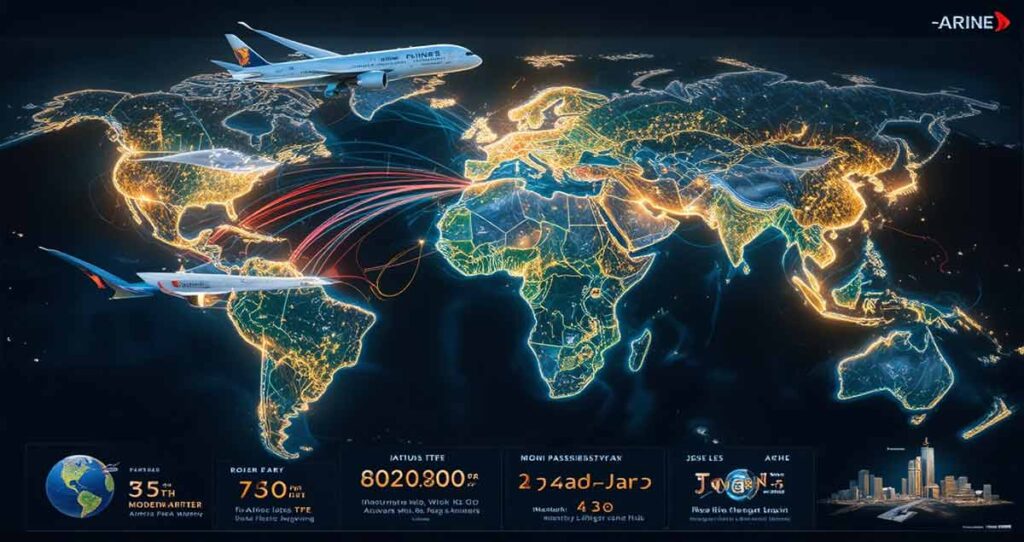
Big network, Taiwan core. China Airlines connects 100+ cities across 30 countries, passenger pros serving business travelers and tourists alike. Taoyuan hub feeds nonstop flights worldwide. SkyTeam partners expand reach.
Cargo hauls Taiwan’s tech exports globally. Smart positioning beats mainland giants on premium routes. A fleet of 85 modern jets covers Asia-Pacific anchors with long-haul reach.
Main Hubs and Connection Points
Taoyuan (TPE) rules preeminent, Taipei’s mega-hub forms 50M travelers annually with fast 60-90 minute associations. Kaohsiung (KHH) handles south Taiwan feeders. Territorial airplane terminals like Taichung (RMQ) and Tainan served residential activity.
One-stop ponders: Tokyo-LAX by means of Taipei beats multi-change terrain courses. Lounge access, fast security, seamless transfers keep pax happy.
Hub Power:
| Hub | Passengers/Yr | Connection Time |
| Taoyuan | 50M | 60-90 min |
| Kaohsiung | 15M | Domestic feed |
| Taichung | 3M | Regional link |
Codeshares and Partner Flights
SkyTeam enchantment opens Delta, Virgin Atlantic, and Korean Airlines associations. Win Delta SkyMiles on CI flights, Taipei-LAX credits, and Seattle grant tickets.
- Codeshares nourish 300+ goals: Delta center points (ATL, MSP), KLM Amsterdam spokes. Worldwide lounges by means of SkyTeam, Need Pass + first class get to.
- Miles everywhere: Book CI metal, redeem anywhere. Partnership beats solo carrier limits.
Cargo and Freight Network
Electronics, fruit, and semiconductors are Taiwan’s export champions worldwide. CI Cargo flies 20 tankers + stomach hold on traveler planes. Taoyuan center handles 1.2M tons annually: iPhones to Apple (US), mythical beast natural product to Japan, chips to Germany. Temperature-controlled holds ship perishables. Beats DHL on cost for bulk tech. Global cold chain kingpin.
Cargo Snapshot:
- Volume: 1.2M tons annually
- Freighters: 20 dedicated
- Key Exports: Tech, food, pharma
Taiwan’s flying warehouse.
Future Outlook for China Airlines
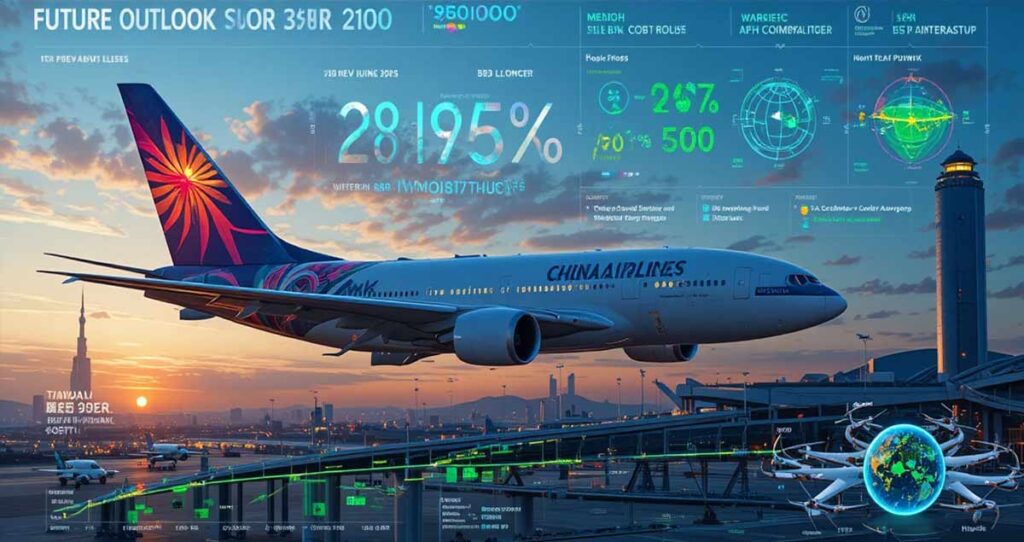
Bright skies ahead. Growth locked in with new jets, route expansions, and premium service focus.
Where China Airlines is Heading Overall
Growth mode hits high gear, 18 new widebodies approved ($8B plan), A350-1000s lead long-haul refresh.
- More US courses peered toward: Phoenix, Boston, DC, past LAX/JFK.
- Green tech thrust: Maintainable flying fuel trials 2026, 25% CO2 cut target.
- Future aviation trends. SkyTeam synergies boost connections.
- Cargo doubles electronics exports. Taiwan hub cements Asia-US bridge status.
New Planes and Better Cabins
A350-1000s arrive in 2026 (15 add up to requested), B777Xs take after. Lie-flat Trade updates: 1-2-1 suites over armada, 17″ 4K screens standard. Premium Economy extends 38″ pitch all over. Economy keeps a 32-34″ legroom edge. Retire 747s, DC-10 relics. Cabins get mood lighting and faster WiFi. Fuel savings fund luxury, 20% cheaper per seat vs. old jets.
Fleet Upgrade Timeline:
| Year | New Deliveries | Retired |
| 2026 | 5 A350-1000s | 4 B747s |
| 2027 | 8 B777Xs | A330s |
| 2028 | 5 freighters | Old cargo |
Competition with Other Airlines
EVA Air rival heats up, CI fights back with SkyTeam miles, lower fares. Beats mainland carriers on service (7/7 stars vs. 4/5), loses volume to Air China. Japan Airlines loses US route access. Service edge wins premium pax: Taipei-LAX Business fills 95%. Agility trumps size, faster fleet refresh, nimble route adds. EVA match means better for flyers.
Taiwan’s sky kings battle, you win bigger seats, smoother flights.
FAQs
Is China Airlines owned by Taiwan?
- Yes, via CADF majority stake. Taiwan’s China Aviation Development Foundation holds a controlling interest, government-linked stability without direct state control. Ensures long-term route protection and crisis funding. Public shareholders balance it. From beginning to end, Taiwan’s flag carrier.
What is the relationship between China Aircraft and the Taiwanese government?
- Indirect via CADF. Stable support, not direct control. The Foundation manages shares strategically, bailed out cash during the 1990s crisis, and routes advocacy today. The government oversees safety, not daily ops. Arms-length model keeps it nimble yet backed.
How does China Airlines differ from mainland China’s airlines?
- Taiwan base, premium focus, SkyTeam. Air China: Beijing, volume focus. CI wins service (7/7 stars), SkyTeam miles, and US/Europe access. Mainland packs seats cheaper, skips alliances. Taiwan quality beats quantity every time.
Who founded China Airlines?
- Retired Taiwan air force officers, 1959. 27 flyboys pooled $12K, bought DC-4s for military charters. Pure grit, Vietnam supply runs first. No government cash, just guts. Dream became Taiwan’s sky pride.
Does China Airlines fly to mainland China?
- Yes, special routes like Xiamen, Shanghai. Limited by politics, chartered flights, and no mass mainland expansion. Cross-strait rules cap frequency. Focus stays on Japan/US/Australia instead. Smart niche play.
Is China Airlines a safe airline?
- Very. IOSA certified 20 years straight, zero fatal accidents since 2002 fleet upgrade. 7/7 Airline ratings stars. Modern A350s/B777s, Category 1 FAA. Fly confidently.
What are China Airlines’ main hubs?
- Taoyuan (Taipei), Kaohsiung. TPE mega-hub connects the globe, KHH serves south Taiwan. Regional feeders like Taichung link the domestic market. Seamless transfers, lounge access.
